Care · Maintenance · Crystal Optics
The Crown Standard.
A Crown chandelier is a precision instrument before it is a fixture. Everything below — the glossary, the troubleshooting log, the installation rules — is what it takes to keep one performing for decades.
Overview
A Crown chandelier is a precision instrument before it is a fixture. The crystal we specify, the geometry we cut, and the metals we mount are all chosen to deliver one specific optical result — and to keep delivering it through decades of household life.
This section documents the standard itself: what we mean by brilliance, why we use K9 optical-grade crystal, and what it takes to maintain the spectral fire that justifies the price.
The content here is drawn from the Master Maintenance Protocol, our internal field manual for certified contractors and estate stewards. The full protocol — 34 pages of installation, glossary, and troubleshooting reference — is downloadable below.
The North Star
The North Star — 'Visual Crack' Defined
The Spectral Snap
The Visual Crack is not a static glow; it is the high-intensity, chromatic pop that occurs when white light is fractured into its full spectral rainbow. When a viewer moves through a room, the fixture should appear to crackle with life as different facets engage. If the light appears milky or soft, the optical engine is failing.
Brilliance is a product of precision. Every K9 element is machine-cut and diamond-polished to create perfectly flat optical planes. The Visual Crack is only achieved when these planes are free of microscopic debris. A single layer of aerosolized oil blurs these edges, turning a sharp spectral snap into a dull, diffused glare.
Geometric Integrity
The Crack relies on the immediate transition from deep shadow to high-intensity highlight. This is why we prioritize the cleanliness of internal chrome cores and Optical Corridors. Without a dark or reflective background to provide contrast, the brilliance has no canvas.
The Contrast Threshold
If the Crack is muted, the fixture is compromised. Maintenance is not about cleaning glass; it is about restoring the spectral performance of a precision instrument.
The Visual Crack — light fractured through diamond-polished K9.
The Investment Series
The Investment Series — Crystal Tier System
I. Material Intelligence: Why K9?
Crown specifies K9 Optical Borosilicate as the primary material across the catalog. Known as the Professional Performance Standard, it offers the ideal balance of refractive fire and architectural durability.
Measured by the absence of seeds (bubbles) and striations, K9 maintains a high reflective index (~1.5), ensuring the Visual Crack while being significantly more resistant to environmental clouding than traditional soft-lead crystal — unless the design specifically calls for seeded bubble block, where bubbles are an intentional sculptural element.
II. Structural Geometry — Brilliance Is 80% Geometry
Crown K9 elements are machine-cut and diamond-polished. This ensures every facet is a perfectly flat optical plane, striking light at calculated angles. Soft, rounded lines often indicate molded pressed glass. Crown's gallery is built on crisp, sharp vertices — the hallmark of high-grade optics, providing the high-contrast pop required for ultra-luxury environments.
Our manufacturers utilize K9 because it provides ~95% of the brilliance of couture grades with ~200% more architectural longevity. It is the smartest choice for high-impact performance.
III. Investment Tier Audit
Tier 1 — Couture Grade
Strass / 30%+ high-lead crystal. Categorized as structural jewelry. High refractive fire but extremely soft and prone to scratching. Reserved for legacy estates and museum-grade focal points.
Tier 2 — Performance Luxury (The Crown Standard)
K9 optical grade. The global standard for luxury residential and hospitality. Offers maximum clarity with high durability, capable of withstanding decades of maintenance cycles.
Tier 3 — Architectural Glass
K5 or soda-lime glass, refractive index 1.45–1.50. Static decorative finish. Minimal light bending. No spectral fire. Found in mass-market retail; often identified by green or blue tint at the edge and mushy molded facets.
IV. The Refractive Index Audit
Crown K9 (1.52+) is an active optical engine — engineered for high-clarity spectral explosion and long-term surface stability. Anything below 1.50 is decorative, not optical.
Crystal Components
Nine ways crystal makes light.
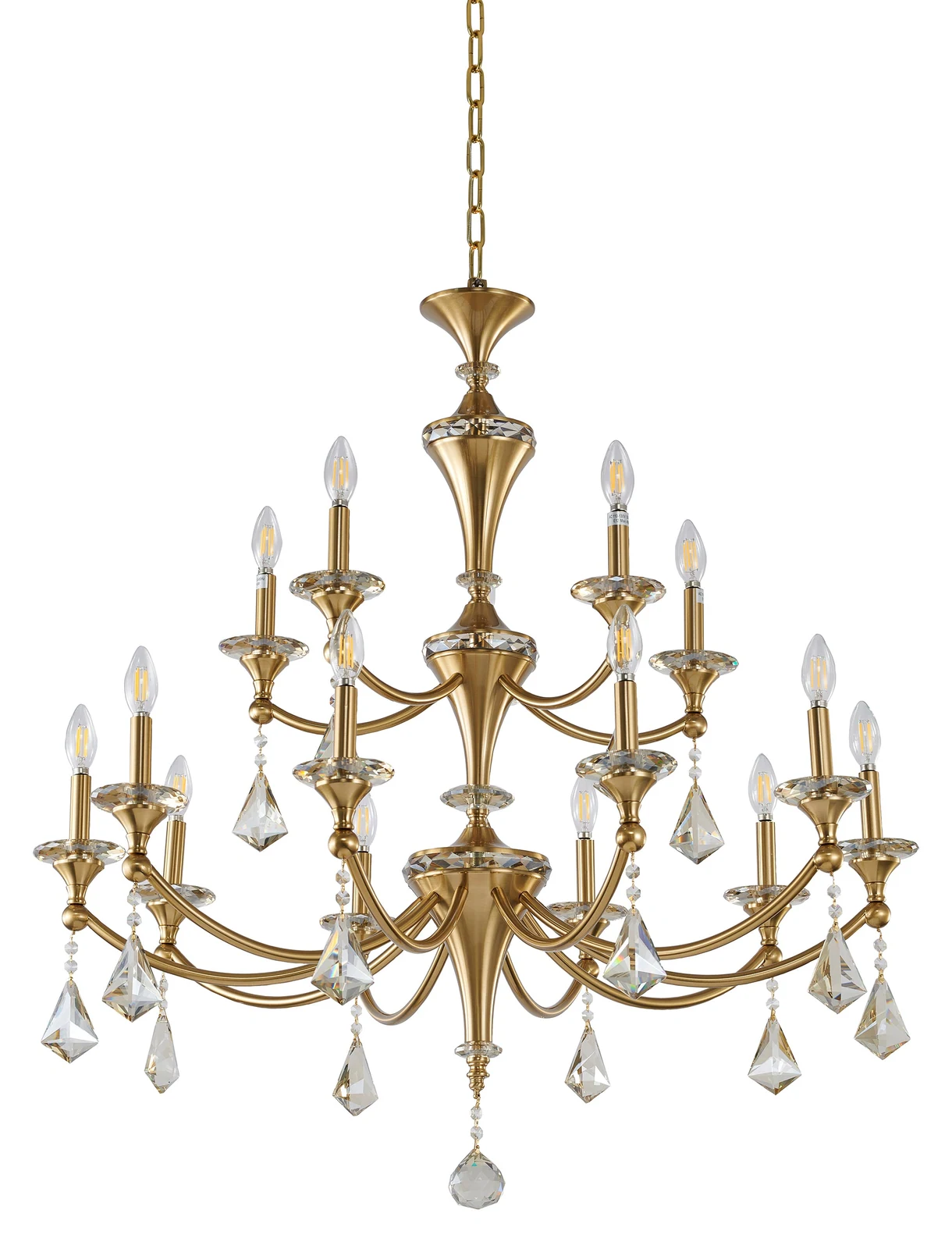
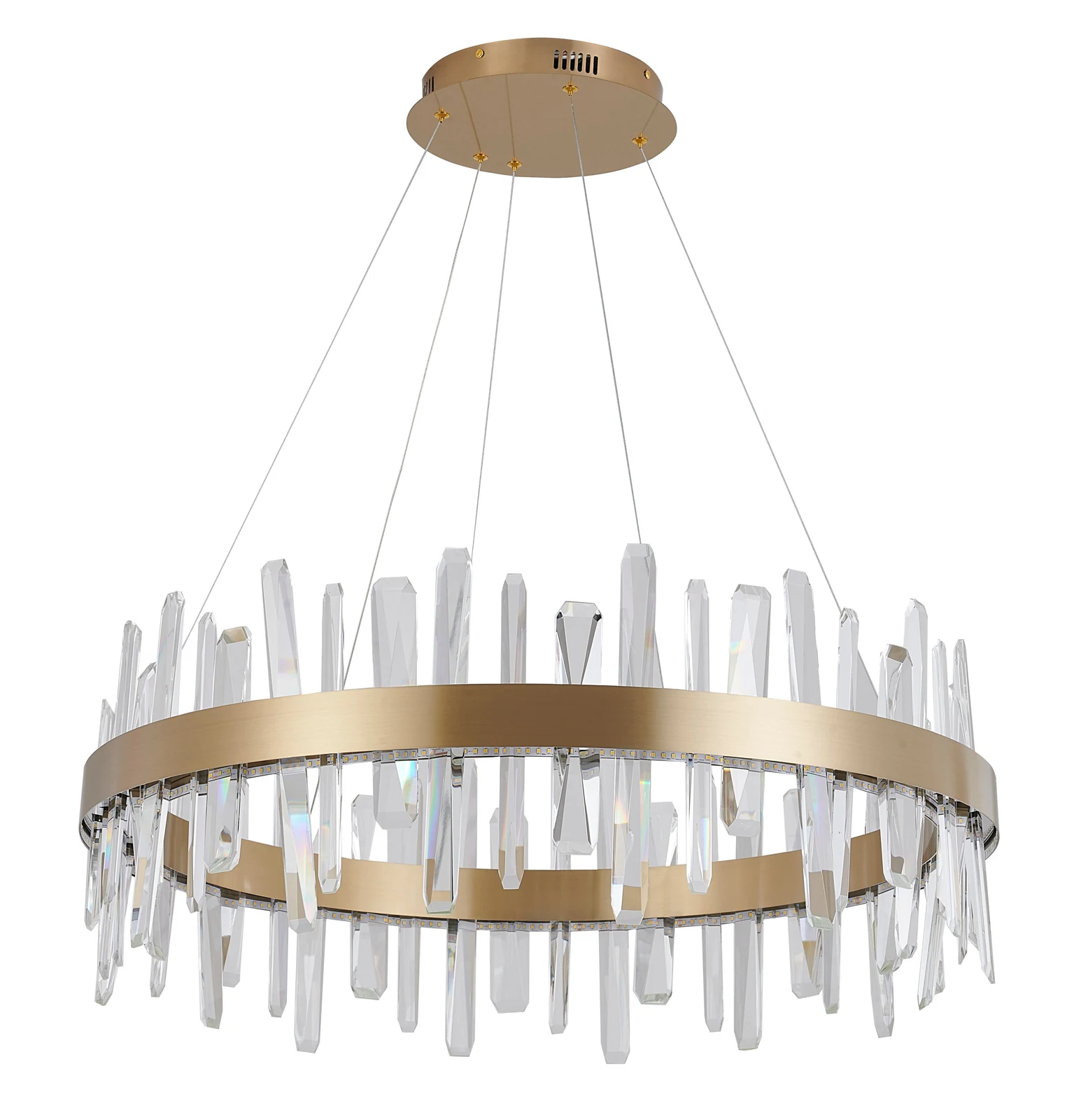
Pendeloque
A timeless, pear-shaped or almond-cut crystal characterized by its symmetrical facets.
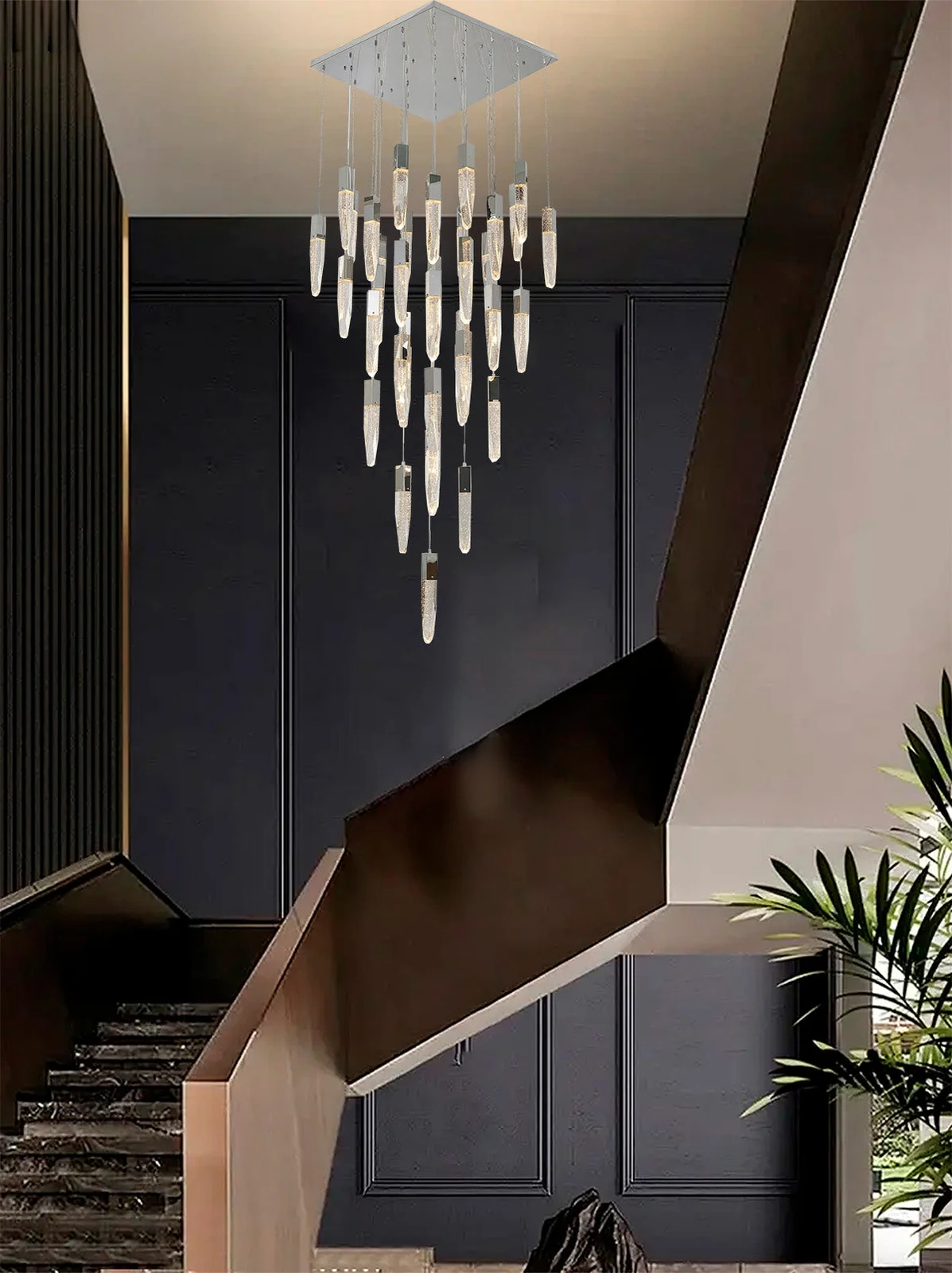
Bubble Block
Precision-engineered column with thousands of embedded bubbles, creating a dense, effervescent sparkle.
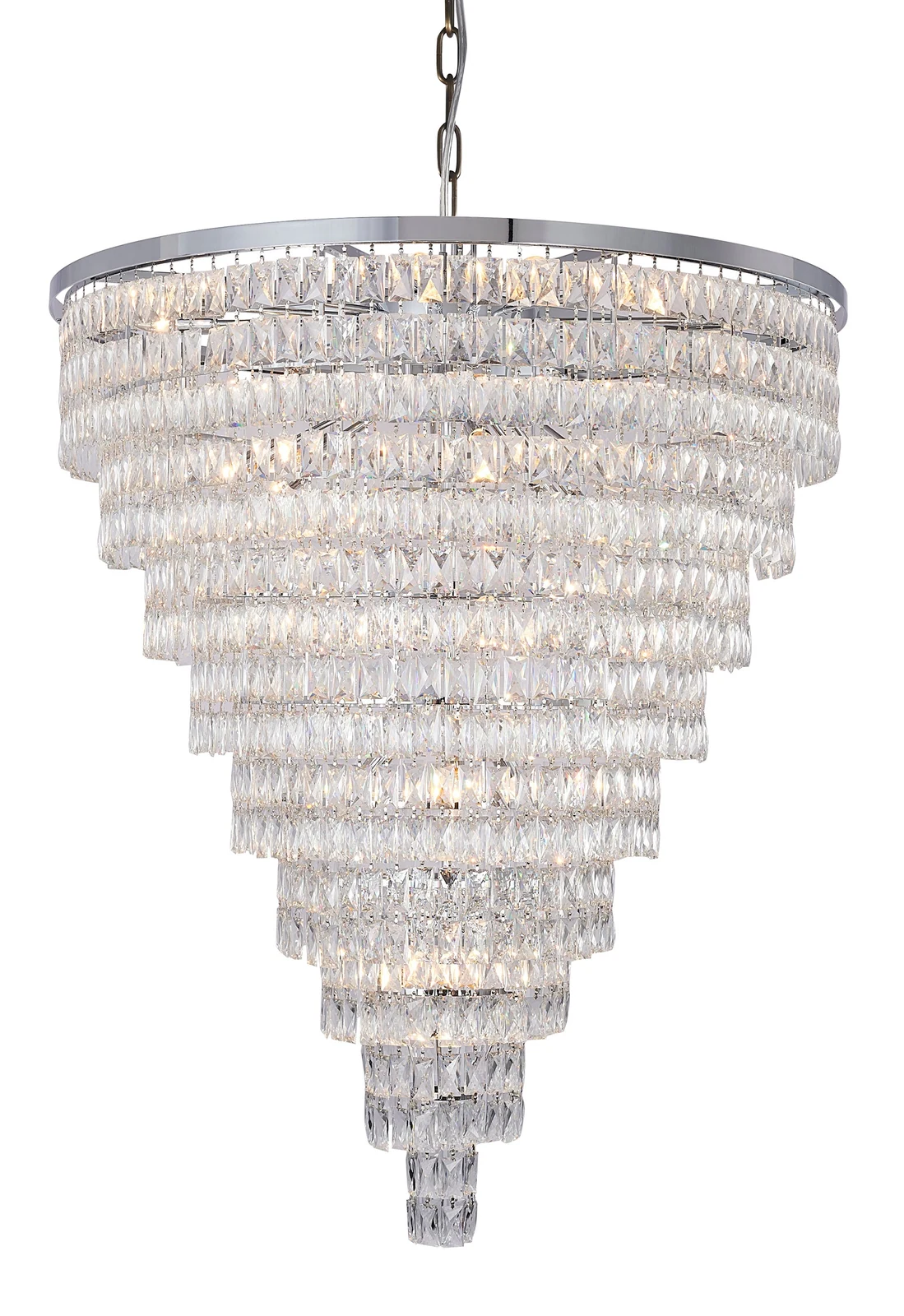
Chard
Raw, asymmetrical, aggressive cuts that break from traditional geometry.
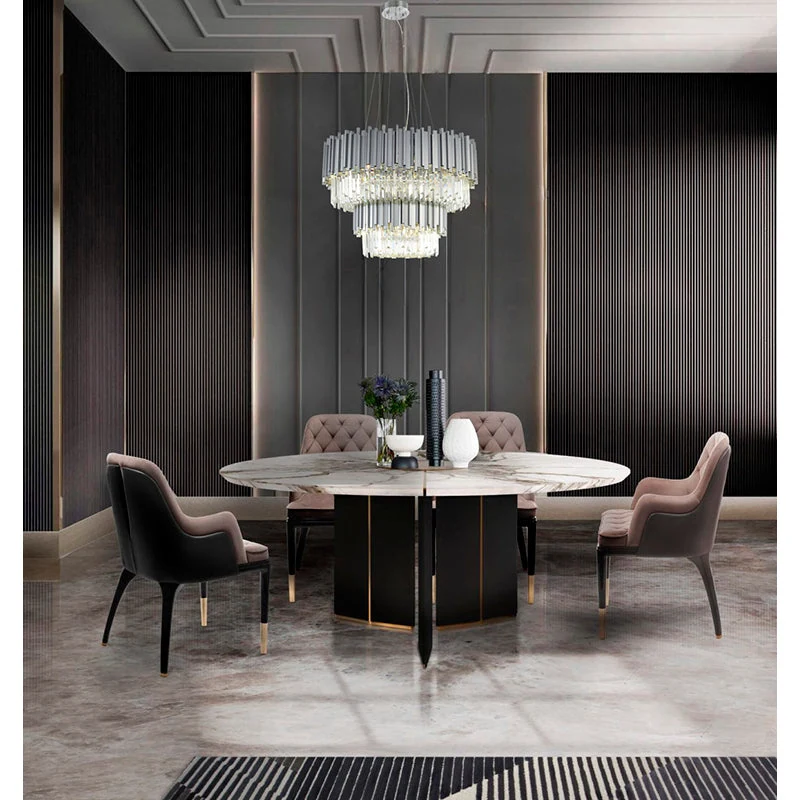
Bobeche
A wide, dish-like crystal element with radial facets, traditionally used to catch wax — reimagined as a reflective light spreader at the base of the candelabra arms.

Rosette
A small, typically star-shaped or floral-pattern crystal accent, used individually or strung.
Regency Ball Drop
Heavy spherical crystal terminal piece featuring multilateral, symmetric diamond facets for 360-degree brilliance.
Universal Care
General Maintenance Protocol
Universal care standards for high-performance optics.
The Golden Rule
Never spray cleaning agents directly onto the fixture. Capillary action can pull fluids into the crystal sockets and electrical housing, causing internal corrosion or socket-burn.
The Dry-Dust Phase
Utilize a high-quality ostrich feather duster or an ionized microfiber wand for weekly maintenance. This removes surface particulate before it has the chance to bond with environmental humidity.
The Wet-Clean Phase
For semi-annual deep cleaning, use a two-glove system. One glove is dampened with a 50/50 mix of distilled water and isopropyl alcohol (90%+); the other remains dry for immediate polishing.
Climate Considerations
In high-humidity or coastal environments, crystal is prone to sweating. These environments require a shorter maintenance cycle to prevent salt-air etching on the crystal surfaces.
The full protocol
34 pages. Yours to keep.
Crystal glossary, install rules, the 20-item field recovery log, connoisseur-grade dimming and re-certification guidance. The same document we hand certified contractors and estate stewards.